Roux vs Beurre Manié: Which Thickener Fits Your Sauce?
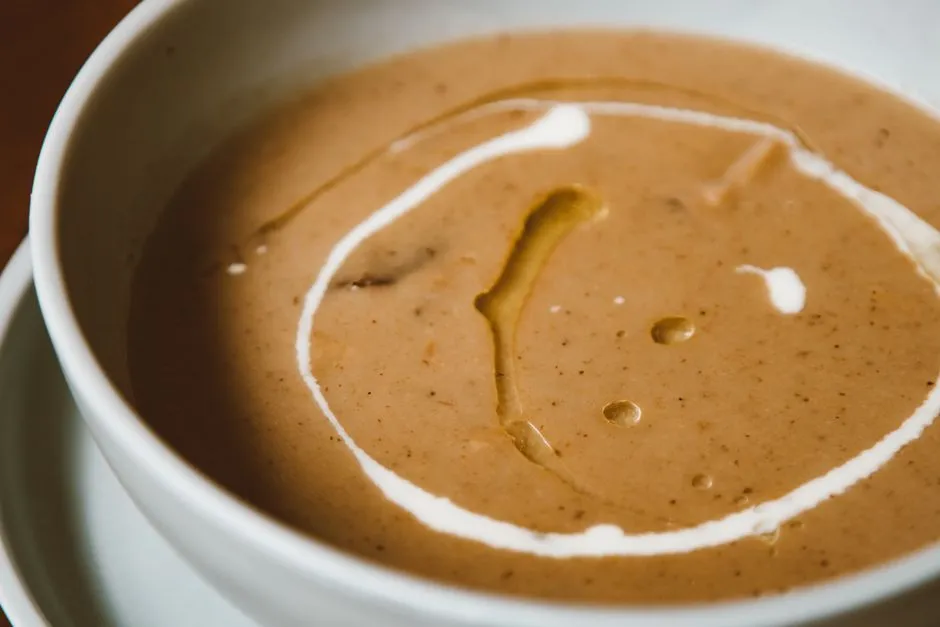
- What is the difference between roux and beurre manié?
- Compare the methods before changing a recipe
- What does an actual roux-based formula look like?
- What does a beurre manié formula tell you—and not tell you?
- Why does "equal parts" need a unit?
- Should you use either thickener in every thin soup?
- What should you do about lumps?
- Why must raw-flour safety stay separate from texture?
- What about milk, wheat, and substitutions?
- How should you handle leftovers?
- Sources
What is the difference between roux and beurre manié?
Roux is flour and fat cooked together before becoming part of a sauce. Beurre manié is softened butter mixed with flour before cooking, used as a thickening component. Choose the method specified by the complete recipe rather than treating the two as an automatic swap. Neither is ready-to-eat raw flour. Check milk and wheat allergens, prevent cross-contact, follow the full cooking method, and handle hot pans and perishable leftovers safely.
For a home cook, the main question is when the recipe asks the flour to enter the dish. Are you building a sauce from its base, or does the liquid already exist? Answer that before reaching for another spoonful of flour.
This is a source-based technique comparison, not a claim of kitchen testing or a new universal sauce formula.
Compare the methods before changing a recipe
The Académie du Goût defines roux as a heated butter-and-flour mixture used to thicken a sauce or soup. Its beurre manié recipe by Paul Bocuse describes an uncooked mixture of softened butter and flour. "Uncooked" describes its preparation stage, not how it should be eaten. Roux glossary and Bocuse's beurre manié
| Question | Roux | Beurre manié |
|---|---|---|
| How does it begin? | Flour combined with fat and cooked | Flour mixed into softened butter |
| What does the recipe need to explain? | Roux cooking, then liquid addition and sauce cooking | Paste quantity, incorporation, and cooking of the receiving dish |
| Is the mixture a complete sauce? | No | No |
| Is its color relevant? | A recipe may specify white, blond, or brown roux | It has not been browned as a roux before use |
| Can you assume a spoonful replaces the other? | No; follow the recipe's quantities and sequence | No; follow the recipe's quantities and sequence |
Our recommendation is simple: keep the first attempt faithful to one complete method. Once you know what it produces, record a deliberate adjustment rather than changing flour, fat, liquid, and cooking sequence together.
What does an actual roux-based formula look like?
Barney Desmazery's Good Food guide uses 50 g butter, 50 g plain flour, and 500 ml whole milk. Those are the published quantities, not our conversion or a recipe for every thickness.
Its method cooks the butter-and-flour paste for two minutes, incorporates hot liquid gradually while whisking, then gently simmers the sauce for ten minutes, stirring occasionally. Use the full instructions and attend to the saucepan throughout. The initial two minutes are one recipe step, not a universal food-safety guarantee for flour. Good Food: how to make a roux
Notice the units. Butter and flour are measured by mass in grams; milk is measured by volume in millilitres. The butter-to-flour ratio is 1:1 by weight. It is not a statement that equal spoonfuls of the two ingredients weigh the same.
Nor is the ingredient list a promise of exactly 600 ml finished sauce. Mixing and evaporation mean that adding the printed numbers is not a valid way to calculate final volume.
For the first attempt, weigh both ingredients and measure the milk in the stated units. Keep the source open for the method instead of reconstructing it from a ratio remembered halfway through dinner.
What does a beurre manié formula tell you—and not tell you?
Bocuse's published component recipe lists 30 g flour and 30 g butter. It describes softening the butter to a smooth consistency and incorporating the flour progressively with a whisk. That is a 60 g mixture before handling losses, with equal weights of its two ingredients. Académie du Goût: beurre manié
It does not establish that the whole mixture belongs in any arbitrary saucepan. The receiving recipe must supply the amount to use and the remaining cooking process. A component formula and a sauce formula answer different questions.
Do not place a bowl of this paste beside a finished dish as though it were an uncooked condiment. If your sauce is already ready to serve and you have no complete, suitable cooking method for adding flour, do not improvise a last-second addition.
A useful margin note is: "Paste made: 60 g. Amount required by this dish: check recipe." That keeps the prepared quantity separate from the required dose without inventing a dose.
Why does "equal parts" need a unit?
A scale reading is not interchangeable with a measuring spoon. For these particular published formulas, equality is established by the gram quantities. Preserve those units when you copy the recipe.
Use this original recipe-reading card before cooking:
- Source: Which complete recipe am I following?
- Component: Is this a roux base or an uncooked butter-flour paste?
- Quantity: What mass is prepared, and what amount does the dish actually require?
- Liquid: How much is specified, and at which stage?
- Cooking: What happens after the flour enters the dish?
- Service: Will this be served now or cooled and stored?
For example, "30 g plus 30 g" answers the component question. It does not answer the liquid or cooking questions. A screenshot containing only the ingredient list is insufficient if those steps appear elsewhere.
Keep the card with the recipe. The value is not paperwork; it is being able to see which question remains unanswered before the pan is hot.
Should you use either thickener in every thin soup?
No. First check whether the recipe already contains ingredients intended to provide body. Our leek and potato soup uses potato and offers texture choices; it is not a roux-based soup. Adding a butter-flour component would change that recipe, rather than complete an omitted step.
Likewise, the dressing in the mustard lentil salad is a different preparation. Neither roux nor raw beurre manié is a shortcut for altering that salad's dressing.
Ask what "too thin" means for the intended dish. A broth, a spoon-coating sauce, and a thick pie filling need not have the same texture. Compare with the source recipe's intended result, not with a different meal.
If you have already altered the liquid quantity, note that first. Further additions made without recording the earlier change make the next batch harder to reproduce.
What should you do about lumps?
Good Food's roux guidance recommends adding the liquid gradually at first and mixing thoroughly between additions. This gives a concrete process to follow rather than alternating unmeasured flour and liquid until the saucepan seems improved. Good Food roux guidance
If lumps remain, pause additions and return to the recipe's troubleshooting instructions. Do not interpret lumps as proof that the dish needs more flour. Record when they appeared: before liquid, during its first addition, or after a later adjustment.
Keep the pan stable and use a utensil suitable for its surface. Avoid splashing hot fat or sauce. Follow appliance instructions for any blending or straining method; do not put hot sauce into a sealed blender or improvise equipment beyond its manufacturer's permitted use.
If a batch has been scorched, do not conceal that problem with more thickener. Starting the affected sauce again is a reasonable cooking decision.
Why must raw-flour safety stay separate from texture?
FDA explains that most flour is raw and may contain harmful bacteria. Do not taste either uncooked paste or uncooked flour. Follow a complete cooking recipe; a thick appearance, a smooth texture, or the absence of a floury taste does not establish safe handling. FDA: flour is a raw food
Keep raw flour away from ready-to-eat foods, clean preparation surfaces and utensils, and wash hands after handling it. Do not invite children to play with the raw paste.
If the sauce accompanies meat, poultry, seafood, or eggs, the food still needs its applicable safe cooking temperature. Making the sauce thicker does not establish the doneness of anything underneath it.
What about milk, wheat, and substitutions?
The butter and milk in the cited white sauce introduce milk ingredients; ordinary plain wheat flour introduces wheat. FDA identifies milk and wheat among the major food allergens. Read every ingredient label, including stock, spreads, seasoning blends, and additions. FDA food-allergy guidance
Prevent cross-contact through ingredients, utensils, and preparation areas. Do not describe an improvised replacement as allergy-safe solely because one ingredient was removed. Follow the diner's requirements and appropriate clinician or dietitian guidance where needed.
For gluten-free or dairy-free cooking, choose a complete recipe developed for the actual replacement ingredients. Do not assume the gram ratio, texture, or cooking time transfers unchanged to every flour blend or spread.
How should you handle leftovers?
For perishable cooked sauces and dishes, FDA advises prompt refrigeration within two hours of cooking, or within one hour when the outside temperature is above 90°F. Keep the refrigerator at 40°F or below and divide large amounts into shallow containers for quicker cooling. Do not wait for a large pot to reach room temperature. FDA safe food handling
For soups and stews with vegetable or meat added, the U.S. FoodSafety.gov chart specifies three to four refrigerated days at 40°F (4°C) or below. Follow the appropriate guidance for the actual dish; this is not a storage claim for uncooked beurre manié. Cold-storage chart
Reheat leftovers to 165°F, measured with a food thermometer; sauces, soups, and gravies should be brought to a boil. Discard food with an uncertain time-temperature history; do not taste it to decide whether it is safe. FoodSafety.gov reheating guidance
For more dinner ideas, browse simple suppers. The useful habit is to choose the thickener with the recipe, then keep ingredient quantity, cooking method, and food safety as three separate checks.